Research, Development & Prototyping
WHAT DOES R&D METHODOLOGY MEAN?
Development is the discipline of examining hypotheses.
Product development is essentially a scientific process: one requirement becomes a hypothesis, the hypothesis becomes a model, the model becomes an experiment — and the experiment becomes knowledge that carries the next hypothesis.
The bottleneck rarely lies in building, but in knowledge: Which question is currently the most expensive? Which assumption carries the greatest risk? A good method is to align the next iteration where uncertainty is highest.
Tools such as CAD, FEM and CFD accelerate this cycle, but do not replace it. They are hypothesis generators — the prototype remains the experiment on which model and reality compete.
“A model is a hypothesis, a prototype is an experiment. They both need each other.”
AT A GLANCE
Frame
V-Model · VDI 2206
Development methodology for mechatronic systems
MODEL CLASSES
CAD · FEM · CFD · MBS
STAGE GATES
Wenzel · Cassie-Baxter
meshing, 1936/1944
PHENOMENA
Plan · Design · Verification · Validation
OUTPUT
Validated prototype
Plus documented basis for decision
BASIC PRINCIPLES
Four guiding principles of methodological development.
These principles separate structured research & development from try-and-error with a higher budget.
Hypothesis-driven
Each iteration answers a concrete, previously formulated question. Those who build without asking do not learn anything useable.
Fail early and cheaply
Bad ideas must be visualised early if their discarding is still cheap. Late corrections cost more factors.
Modelling & Experiment Pairing
Simulation without validation is speculation. Attempting without a model is expensive. Both worlds correct each other.
Data before opinion
Decisions are made against measured values, not against impressions. Process history is part of the product.
HOW DOES THE METHOD WORK?
The development cycle as iteration.
R&D according to VDI 2206 does not run in one line, but in closed loops, each with its own model, its own experiment and a clear learning gain.
Specification
Requirements, boundary conditions, acceptance criteria — quantitative.
Plan
Stretch solution space, evaluate variants, fix architecture.
Model
CAD, FEM, CFD, MBS — virtual pre-test of all critical assumptions.
Prototype
Physical pattern, specifically designed for the risk questions.
Validation
Attempt, comparison against model, documented learning gain → next loop.
EXAMPLES FROM HISTORY
Iteration loops that industries have made.
Methodical development is older than the word. These three classics show how much a consistent hypothesis-test cycle does.

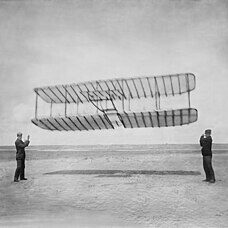
Own wind tunnel before the first flight
Instead of flying directly, the brothers built a wind tunnel and massed over 200 wing profiles. The methodology — not the idea — decided the success.

academic · Model before prototype · 1901-1903

Stage Gates as program logic
Each Apollo mission was an attempt that clarified one hypothesis of the next. The methodology became the presentation of modern stage gate processes in industry.
academic · Iteration in the big· 1961-1969

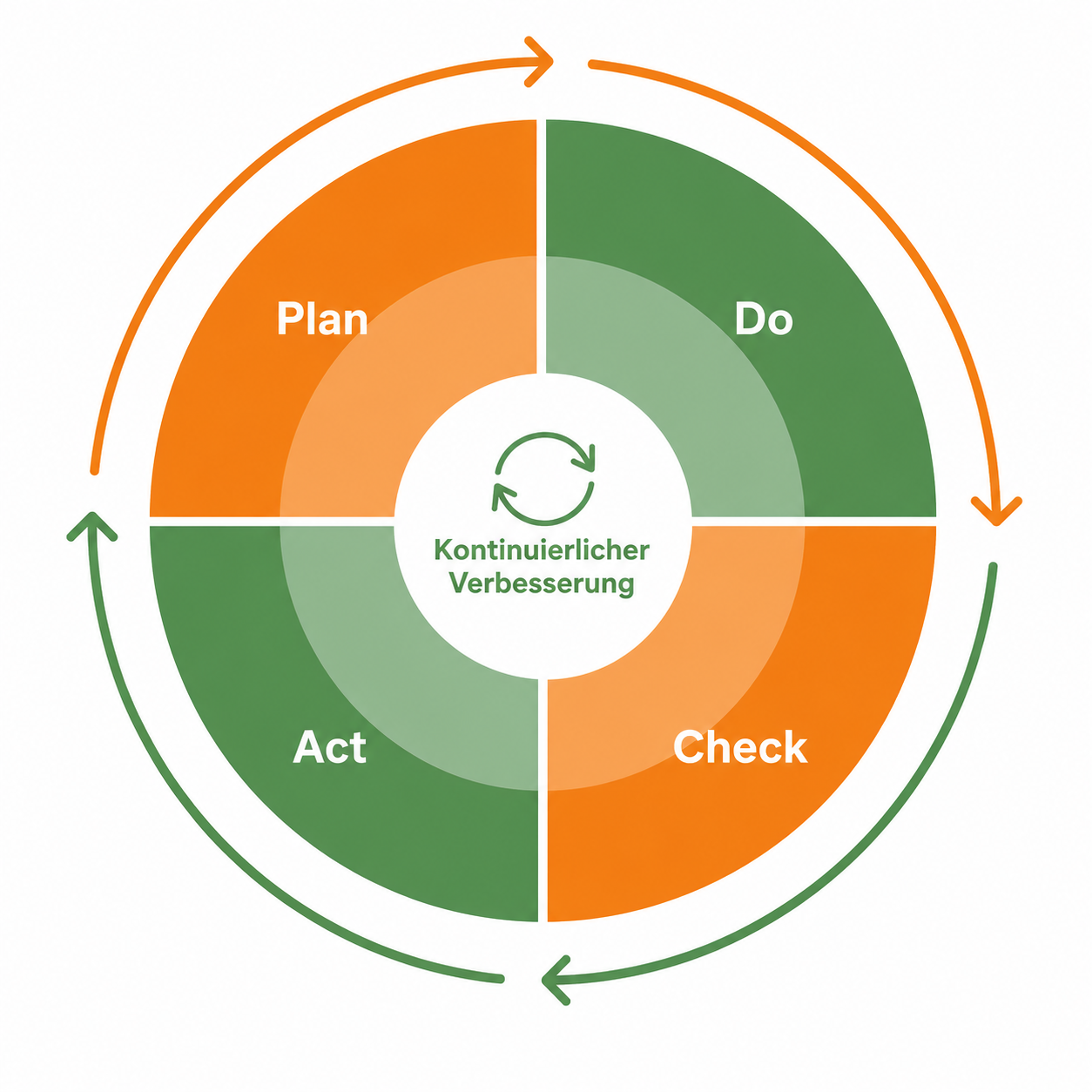
Lean Engineering & PDCA
The Plan-Do-Check-Act cycle became the grammar of modern product development — with a measurable effect on quality, speed and capital commitment.
academic · Iteration als Kultur · seit 1950
STANDARDS & FURTHER SOURCES
On what basis we work.
Guideline
VDI 2206 (2021)
Development methodology for mechatronic and cyber-physical systems.
NORM
ISO 9001 / DIN EN ISO 13485
Quality management and design control in regulated development.
MODEL
Deming-Cycle (PDCA)
Plan – Do – Check – Act. Basic pattern of iterative improvement.
Guideline
VDI 2221 Blatt 1 (2019)
Methodology for developing and constructing technical systems.
Book
Pahl & Beitz: Construction theory
Springer, 9. Edition. Standard work of methodical construction.
MODEL
Cooper, R. G.: Stage-Gate
Decision-driven product development process.
Contact
Ready for your next project?
We look forward to your inquiry — whether concrete project, open question or first idea.